Service
Drought Tolerant Landscaping in Folsom
Lawn conversions and low-water planting designed around Folsom watering rules and a rainless summer.
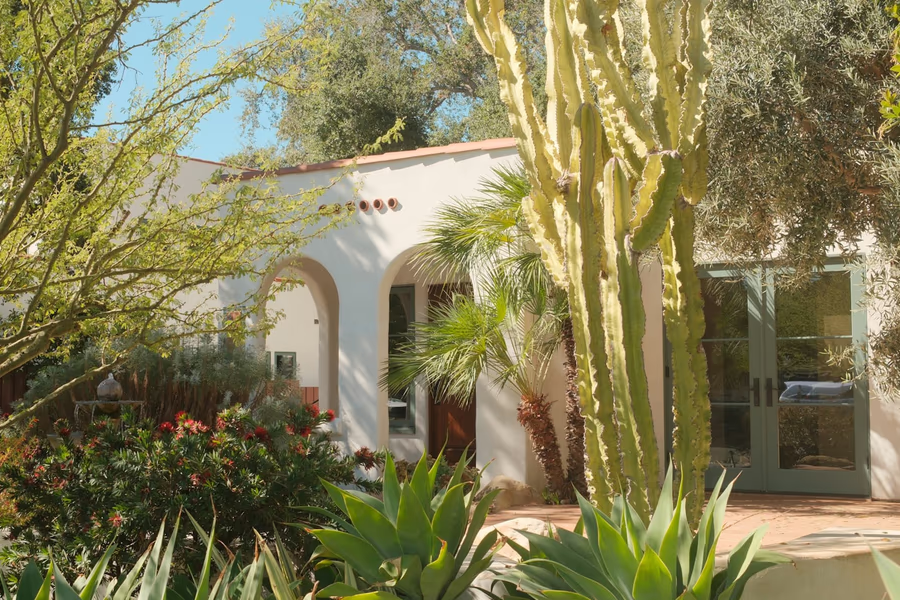
Drought tolerant landscaping in Folsom is less about gravel and more about matching plants to a climate with roughly 26 inches of rain that arrives almost entirely between October and April, then nothing for four months. A converted front yard replaces turf with a planting palette that holds up through the dry stretch, drip irrigation in place of spray heads, and mulch deep enough to keep the root zone from cooking. Conversions typically run $8 to $18 per square foot installed, which puts a standard Folsom front lawn of 800 to 1,500 square feet somewhere between $7,000 and $25,000 depending on how much hardscape and boulder work goes into the design. The water saving is real, and so is the maintenance saving: a low-water yard is not a no-maintenance yard, but it is a yard that stops needing a mower.
What the scope covers
- Turf removal, either sheet-mulched in place or excavated and hauled, depending on soil and timeline
- Planting palette selected for the local summer, weighted toward California natives and Mediterranean-climate species
- Conversion from spray heads to drip or inline emitter tubing, with the valve and controller reprogrammed
- Three inches of mulch over the planted area to hold soil moisture through the dry months
- Boulder, decomposed granite, and dry creek detailing where the design calls for it
- Hydrozone grouping so the thirsty zone near the entry is not on the same valve as the dry back slope
- Establishment watering schedule handed over in writing, with the step-down plan for years one through three
On drought tolerant work
How much does it cost to replace a lawn in Folsom?
Do low-water plants still need irrigation?
Which low-water plants hold up in Folsom yards?
Is sheet mulching better than digging the lawn out?
Will a low-water yard look like a gravel lot?
Further Reading
More on this from the field notes
Landscaping a new-build lot south of Highway 50
What a builder hands over on a new Folsom lot, why compacted ground is the first real cost, the two clocks running, and the order to tackle a blank pad in.
Two quotes, twenty thousand dollars apart, both honest
Why landscape quotes for the same Folsom yard vary by twenty thousand dollars, which buried line items explain the gap, and the seven questions to ask.
The Folsom landscaping calendar, month by month
When to plant, when to build hardscape, when to book a crew, and when to leave the yard alone. A month by month landscaping calendar for Folsom, California.
Adjacent Work
Scopes that usually travel together
Landscape scopes overlap more than most trades. Irrigation gets opened up whenever planting changes, and drainage gets decided the moment a patio goes in, so pricing the neighboring scope at the same time normally costs less than coming back for it.
Landscape Design and Installation
Full yard design and build, from planting plan and grading through irrigation, lighting, and finish planting
Front Yard Landscaping
Curb appeal work for Folsom front yards, including HOA-friendly planting plans and entry walkways
Hardscaping, Patios and Retaining Walls
Patios, paver walkways, seat walls, and engineered retaining walls for Folsom slopes
Irrigation and Drainage
Sprinkler and drip system work, controller programming, and winter runoff control
Thinking about the yard this year?
Ring (916) 282-5150, or send the form, and a local landscaping company prices the work for nothing anywhere around Folsom.